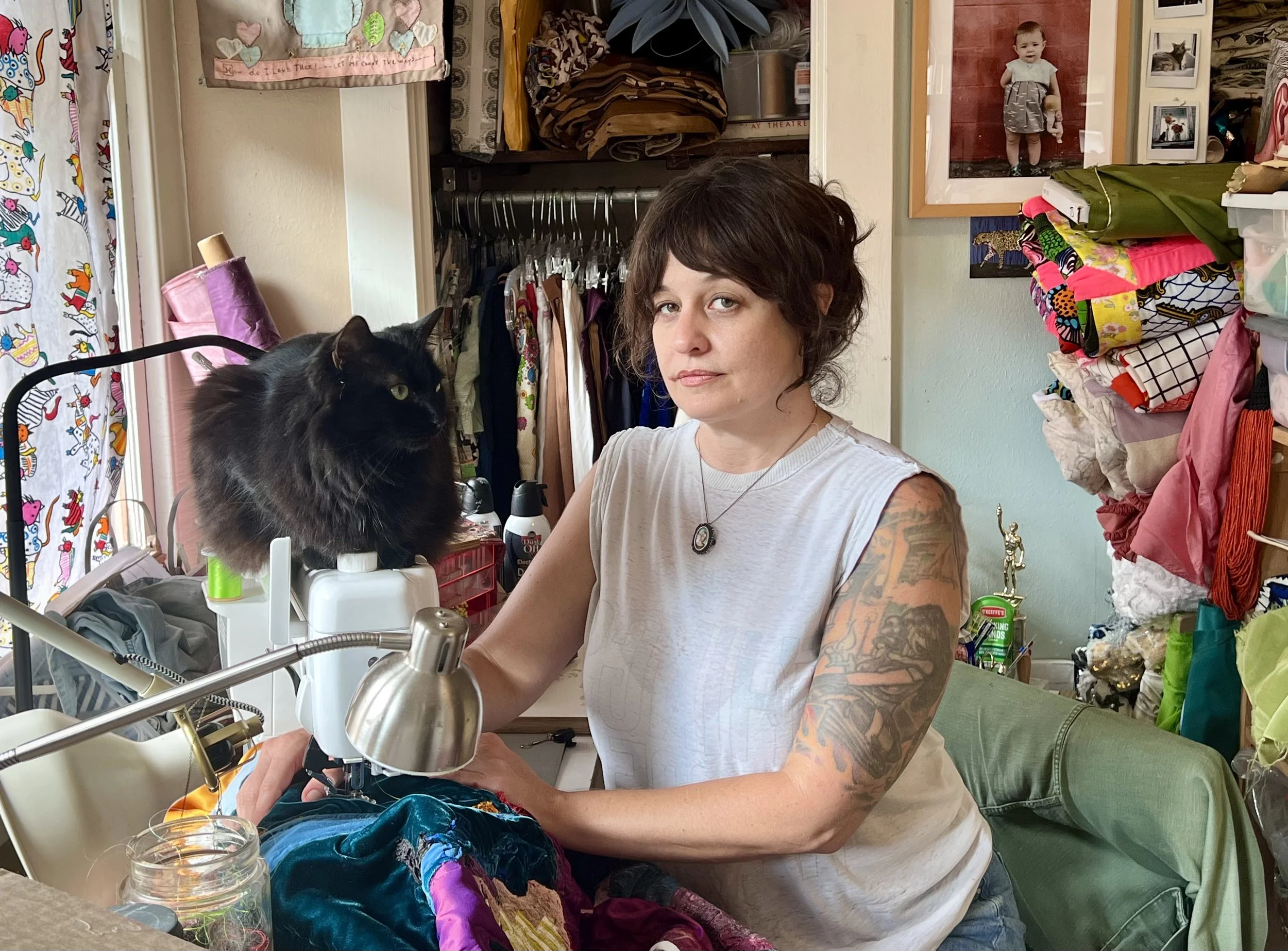
photo by Juno Ballard
Lizz Freeman is a community-taught artist who began showing her work at 15. Her multi-disciplinary practice began with photography and has evolved to encompass textile arts, printmaking, and installation. Her decades-long work with clothing produced an archive of thousands of fabric swatches from which she draws to create her complex and intriguing sewn assemblages. She teaches and has a studio practice in New Orleans, where she lives with her husband and daughter.
My current body of work falls in the tradition of Hannah Höch's repurposed material feminist anti-bourgeois photomontages, Kurt Schwitters' avant garde assemblage commentary on consumerism and Eva Hesse's poetic inspiration in uncommon art materials.
This work facilitates conversation about what has been willfully woven into the fabric of society. The array of materials I use speaks about the class system and how "brand" is valued over all else, but quality can signal skills learned through many hours of labor and practice.
I print my photography onto fabric. I cut and piece textiles together with a sewing machine and invisible or neon thread, building layers of fabric, thread, or batting to create texture and dimension. In some areas, the machine and thread are used to make gestures that capture the frenetic energy of a high-speed collision between mechanical precision and human intuition. The physical act of making the work is broken up by research on the history of an object or fabric, which often gives new insight to link items. Compositions build as the materials come together. An Odd Fellow robe here, one of my old hormone patch backings there.
The finished sewn assemblages are sometimes traditionally stretched like a painting, some more closely resembling quilts, while others show off sculptural elements that build through many layers of thread or fabric. Pulling from the 30-year archive of my personal photographs lends a singular viewpoint. Compiling those images with mass produced textiles recontextualizes salvaged materials from the last 150 years and opens up a dialogue on America’s complicated history to help imagine possible futures.
-
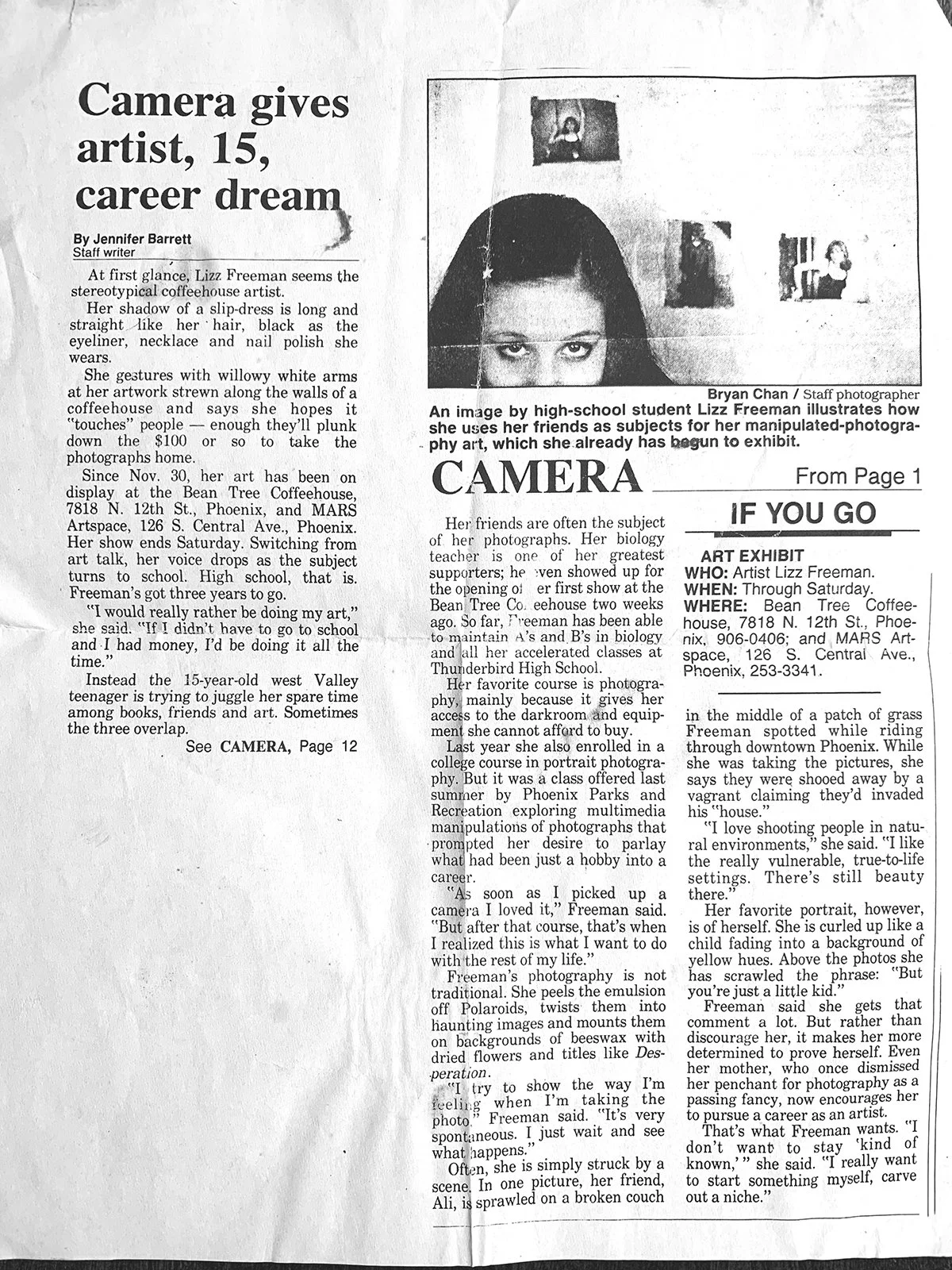
Camera gives artist, 15, career dream by Jennifer Barrett The Arizona Republic 1996
I used to be kind of embarrassed by this article. But now that it’s a few decades later, I am blown away by 15-year-old Lizz’s drive and determination.